Whether you have just moved to Cork, are studying at UCC or MTU, or are visiting for a few days, this guide covers the places you may need to find: hospitals and out-of-hours doctors, Garda stations, the fire brigade, post offices, libraries, universities, parks, churches and mosques, the courthouse, and how to get around and park. Most of them are within a short walk of St Patrick’s Street, and of our restaurant on Marlborough Street. In an emergency, call 112 or 999.
Cork has several public hospitals run by the HSE, plus private hospitals. Which one you go to depends on what you need, and, for an emergency department, on your age.
CUH, in Wilton on the south-west side of the city, is the largest hospital in Cork and one of the biggest teaching hospitals in the country. It is the major trauma centre for the south of Ireland and has a regional cancer centre and a cardiac renal centre. Its emergency department treats adults and children: children under 16 who need an emergency department go to CUH.
Cork University Maternity Hospital (CUMH) is on the same campus. Several bus routes run from the city centre to the hospital; check the Transport for Ireland journey planner for the latest routes.
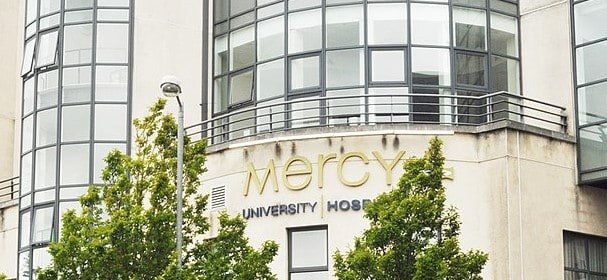
The Mercy is the city-centre hospital, on Grenville Place by the north channel of the River Lee, about ten minutes’ walk from Patrick’s Street. Its emergency department is for adults aged 16 and over. The hospital also runs an urgent care centre at St Mary’s Health Campus in Gurranabraher.
Known locally as the South Infirmary, this hospital specialises in planned care such as eye, ear, nose and throat, orthopaedic and skin treatment, rather than emergencies.
A large private hospital on College Road near University College Cork, with a wide range of specialist services.
For a minor illness, a pharmacy is often the best first stop: there are several on St Patrick’s Street, Oliver Plunkett Street and the streets around them, and pharmacists can tell you whether you need a doctor. If you need a GP urgently in the evening, overnight or at the weekend, call SouthDoc, the out-of-hours GP service for Cork and Kerry, on 0818 355 999. It covers weekday evenings and nights from 6pm to 8am, and weekends and bank holidays around the clock. A nurse triages every call by phone and, if you need to be seen, books you into a treatment centre such as the one on the Kinsale Road; it is not a walk-in service. In a life-threatening emergency, call 112 or 999.
An Garda Síochána, “the guardians of the peace”, is Ireland’s national police service. It was set up in 1922 as the Civic Guard and renamed in 1923. Most Gardaí do not routinely carry firearms, and in everyday speech people call them “the guards”. One officer is a garda, several are Gardaí, and a police station is a Garda station.
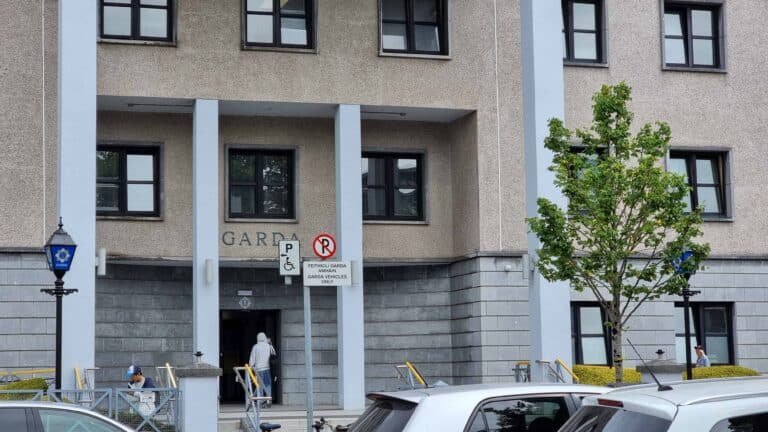
The main Garda station in the city, on Anglesea Street near City Hall, about ten minutes’ walk from Patrick’s Street. It is the headquarters of the Cork City Garda division.
The Bridewell station is in the old city centre near Cornmarket Street, and there are stations in the suburbs, including Gurranabraher, Mayfield, Togher, Blackrock, Douglas and Bishopstown. Opening hours vary, so check the Garda station finder on garda.ie before you call in.
Cork City Fire Brigade (Briogáid Dóiteáin Chathair Chorcaí) is the fire and rescue service for the city and its suburbs, run by Cork City Council. As well as fighting fires, its crews deal with floods, road traffic collisions, people trapped in lifts, hazardous materials and other emergencies, and they carry out fire safety inspections. The ambulance service is run separately, by the HSE’s National Ambulance Service.
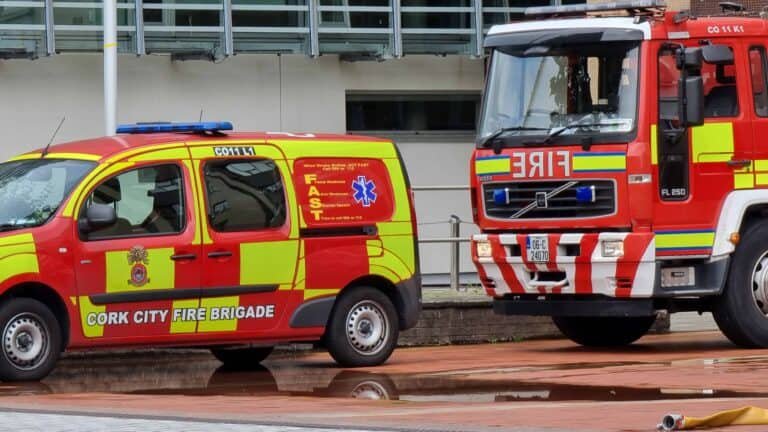
After the great fire of Cork in 1622, insurance companies ran the city’s first organised fire brigades. Cork Corporation set up the Cork Fire Brigade in 1877. Its hardest night came on 11 December 1920, during the War of Independence, when British forces set fire to the city centre: much of Patrick’s Street, City Hall and the Carnegie Library were destroyed, and firefighters were shot at while they worked. The first motor pump arrived in 1923, and the brigade’s headquarters on Anglesea Street opened in 1975.
The brigade’s stations are on Anglesea Street (headquarters), in Ballyvolane on the north side, and in Ballincollig, which joined the city when its boundary was extended in 2019.
An Post is Ireland’s state-owned postal service, formed in 1984 when the old Department of Posts and Telegraphs was split in two. As well as letters and parcels, post offices handle bill payments, savings, foreign exchange and some State payments. In Irish, a post office is Oifig an Phoist.
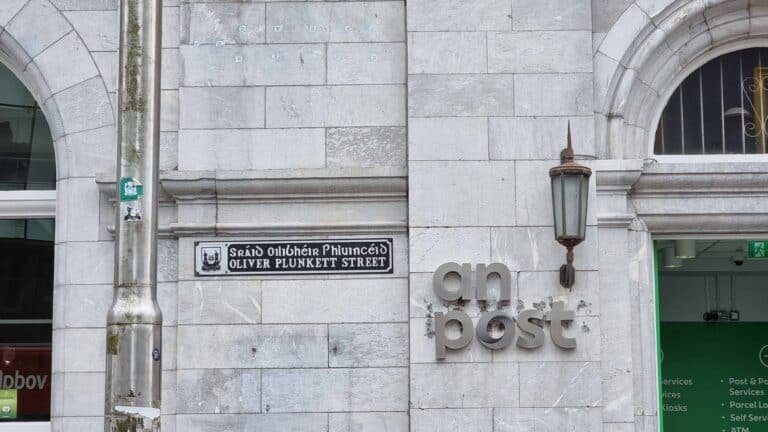
Cork’s main post office is on Oliver Plunkett Street, on the site of the city’s old Theatre Royal, and is the handiest for the city centre. There are smaller post offices and postal agents in shops around the city and in every suburb. The GPO is open Monday to Saturday and closed on Sundays; some smaller post offices, such as Douglas, close at 1pm on Saturdays.
Sending something to an Irish address? Every address has had an Eircode, a seven-character postcode, since 2015; ours is T12 WN26. Parcels can also be collected and sent through An Post’s parcel lockers and partner shops.
Public libraries in Ireland are free to join, and there are no fines for late returns. Members can borrow books, audiobooks and DVDs, use computers, Wi-Fi and printing, read newspapers and magazines, and borrow ebooks and eaudiobooks through the BorrowBox app. Libraries also run events, story times for children, reading groups and study space.
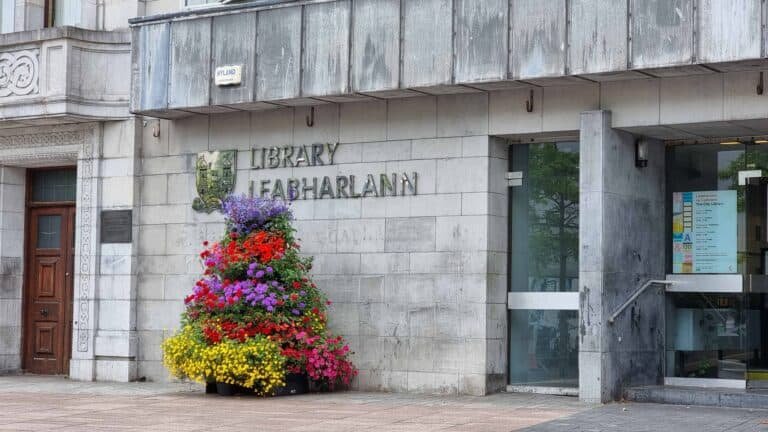
The main library is on the Grand Parade, across from Bishop Lucey Park. It replaced the Carnegie Library on Anglesea Street, which was burned in December 1920, and opened in 1930. It has a lending library, a music library, a local studies department for anyone researching Cork history or family history, and reading and study spaces.
Cork City Libraries has branches in Ballincollig, Bishopstown, Blackpool, Blarney, Douglas, Glanmire, Hollyhill, Tory Top Road (Ballyphehane) and the Frank O’Connor Library in Mayfield, plus a mobile and home delivery service. You can join at any branch or online, and one card works in them all.
The Boole Library at University College Cork is named after George Boole, the university’s first professor of mathematics, whose algebra later made computer programming possible. University libraries are mainly for students and staff, but they can give access to visiting researchers.
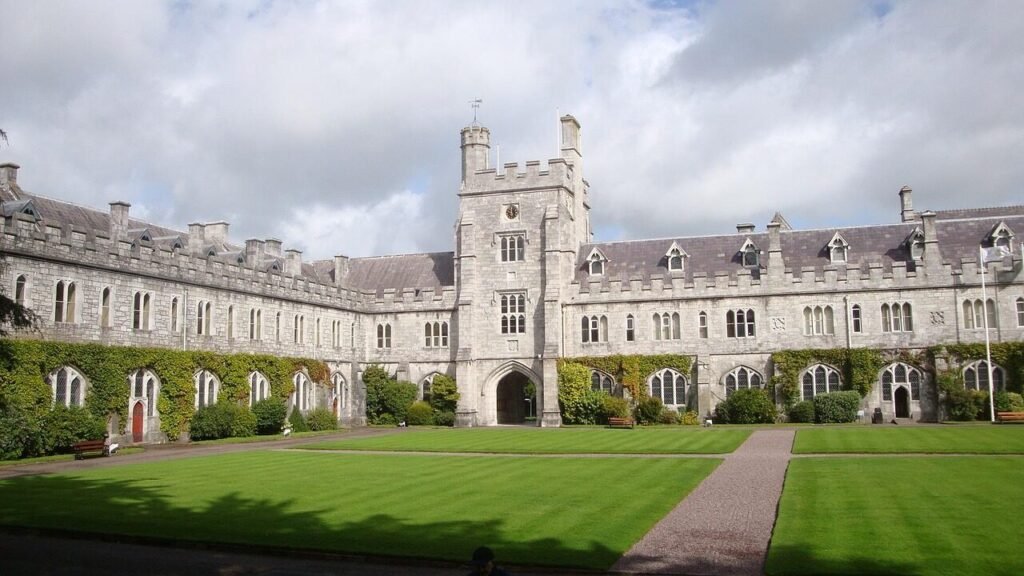
UCC was founded in 1845 as Queen’s College Cork, one of three Queen’s Colleges alongside Belfast and Galway, and opened in 1849 with 23 professors and 181 students. It became University College Cork in 1908. The site above the River Lee was chosen because it was believed to be close to where Saint Finbarr founded his monastery and school, which gives the university its motto: “Where Finbarr taught, let Munster learn.”
Today UCC has more than 20,000 students and has been named Irish University of the Year by the Sunday Times several times. The campus is well worth a walk even if you are not studying there: the Tudor Gothic Quadrangle by Sir Thomas Deane and Benjamin Woodward, the Stone Corridor with its Ogham stones, the Honan Chapel, the free Lewis Glucksman Gallery, and the restored Crawford Observatory, built in 1880 by Howard Grubb. The visitor centre runs guided tours.
MTU was formed in 2021 when Cork Institute of Technology joined the Institute of Technology Tralee. Its main Cork campus is in Bishopstown, and it also includes the Crawford College of Art and Design and the Cork School of Music, both in the city.
Studying in Cork? The city centre is small enough to walk, students get discounts on buses and trains with a student Leap card, and there are plenty of places for a long lunch between lectures. See our lunch in Cork guide.
Cork’s best-known park is by the River Lee on the Mardyke, between the city centre and UCC. It was the site of the Cork International Exhibition in 1902 and was named after Edward Fitzgerald, the Lord Mayor who proposed it. Its 12 acres or so have gardens, a pond and fountain, sculptures, a bandstand, a café, a large playground and the free Cork Public Museum. Daly’s Bridge, a pedestrian suspension bridge known locally as the “Shaky Bridge”, crosses the river to Sunday’s Well.
A small green space in the middle of the city, opened in 1985 to mark 800 years since Cork’s first charter. Part of the old medieval city wall was uncovered when it was built and can still be seen inside. A good spot for a sandwich in the sun.
A lake in a quiet residential area, home to swans, ducks and geese, with a path around it that is popular with walkers, runners and families.
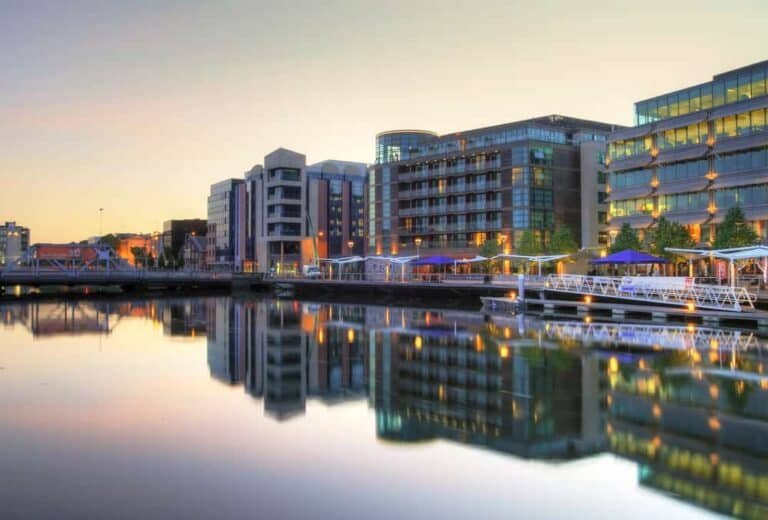
The tree-lined Marina walk follows the river from the city out towards Blackrock, and the newer Marina Park beside Páirc Uí Chaoimh has added green space, play areas and paths to the docklands.
A local park of about 7.5 acres between Victoria Road and Monahan Road, named after US President John F. Kennedy, who visited Cork in June 1963. It is used by local sports clubs and teams for training.
Tramore Valley Park, a former landfill site turned into a large park with trails and a cycle track, and Ballincollig Regional Park, with riverside walks past the ruins of the Royal Gunpowder Mills. For more walks and runs, see our guide to things to do in Cork city.
Cork has churches of every main Christian tradition within walking distance of the centre, and mosques a short trip south of it. Mass and service times change through the year, so check each church’s or parish’s website. For sightseeing at St Fin Barre’s Cathedral and the Shandon Bells, see our guide to things to do in Cork city.
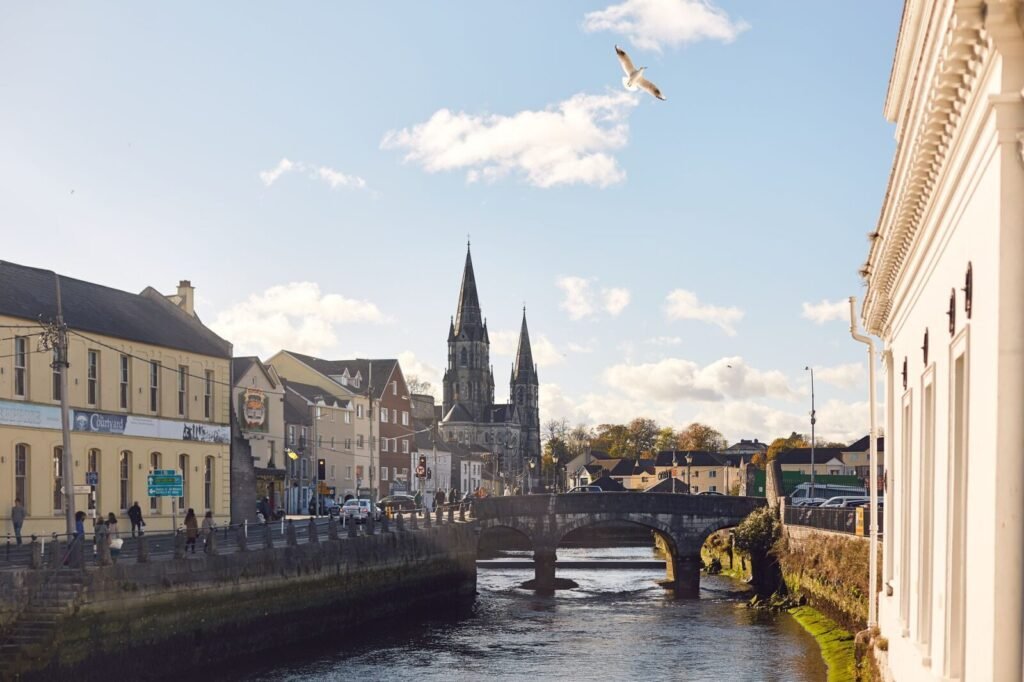
The Church of Ireland cathedral of Cork, south of the river, on the site where Saint Finbarr is said to have founded his monastery. Services are held on Sundays, and visitors pay an admission charge at other times.
Built in 1722, St Anne’s is famous for its bells, which visitors can ring, and its four clock faces, which do not always agree, earning the tower the nickname “the four-faced liar”.
The Catholic cathedral of the diocese of Cork and Ross, dating from 1808, on the north side of the city near Shandon.
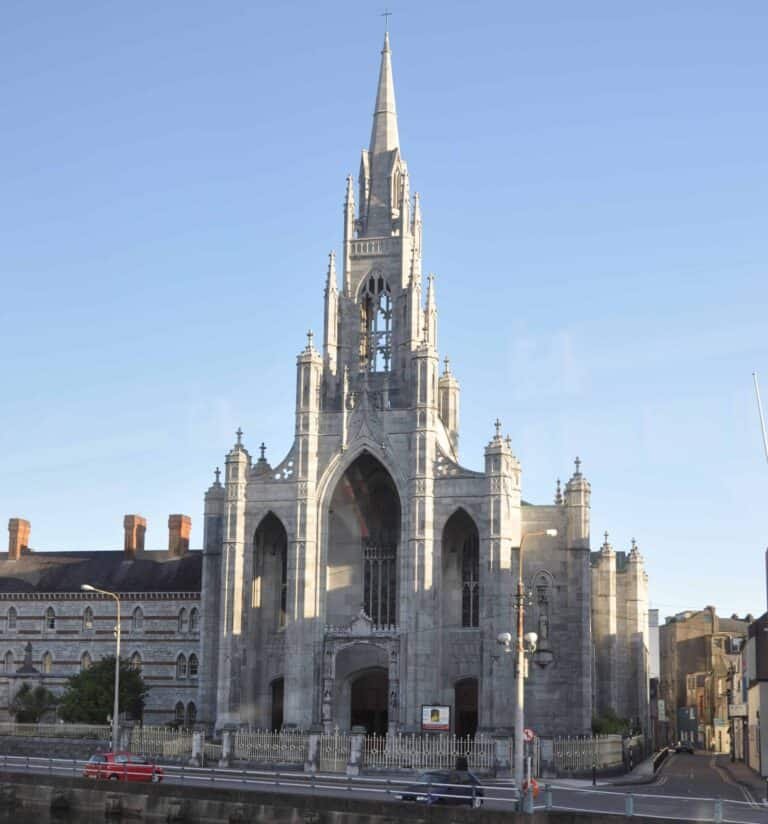
Run by the Capuchin friars, this Gothic Revival church on the river was built as a memorial to Father Theobald Mathew, leader of the 19th-century temperance movement. His statue stands at the end of Patrick’s Street.
A beautiful Victorian Gothic church tucked between Patrick’s Street and Paul Street, designed by E. W. Pugin. It is a peaceful stop in the middle of the shopping streets.
The Cork Islamic Cultural Centre is at 60 Tramore Road in Ballyphehane, and there is a large mosque and Islamic centre in the Sitecast Industrial Estate in Togher. Both are south of the city centre; check with each centre for prayer times, including Jumu’ah on Fridays. Looking for halal food in town? See our halal restaurant in Cork City centre.
St Augustine’s on Washington Street; the Honan Chapel at UCC, with its stained glass by Harry Clarke and others; Christ Church on South Main Street, now the Triskel Christchurch arts centre; and the tower of the Red Abbey, from the 14th century and the oldest building still standing in the city.
Cork Courthouse on Washington Street is one of the city’s great public buildings, with a huge Corinthian portico facing the street. It is still a working court, hearing both criminal and civil cases.
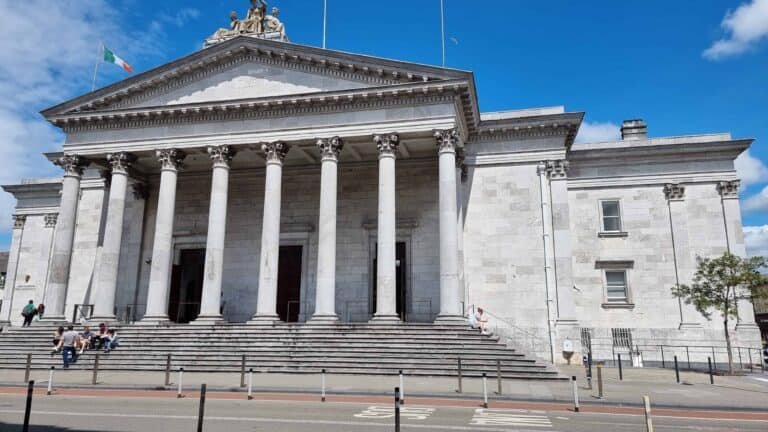
Cork’s separate city and county courthouses were replaced in the 1830s by this single building on what was then Great George’s Street. It was designed by the brothers James and George Richard Pain, who also designed Holy Trinity Church, and completed in 1835. A fire in 1891 gutted the interior, which was rebuilt behind the original front, and the building was refurbished and extended in the 2010s.
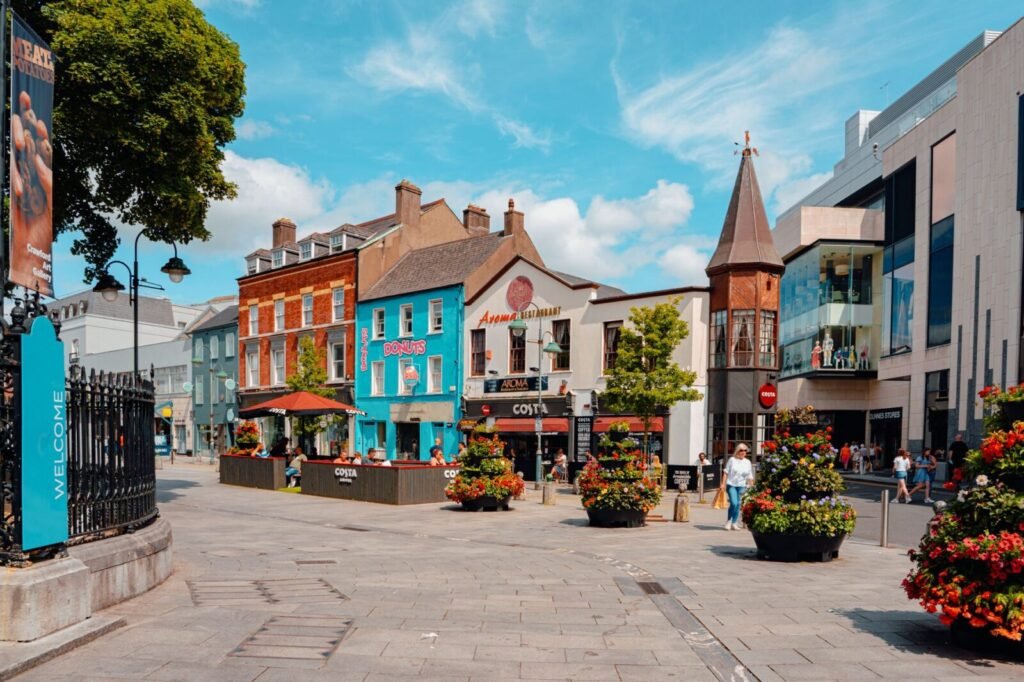
The streets around Marlborough Street and Oliver Plunkett Street are pedestrianised for most of the day, so plan to park in a multi-storey and walk. Q-Park Grand Parade (352 spaces) and Q-Park City Hall are open 24 hours. Cork City Council runs the Paul Street car park in the shopping streets beside St Patrick’s Street, and the North Main Street car park, open 7.30am to 9.30pm Monday to Saturday and from 11.30am on Sundays. Coming from the south? The Black Ash Park & Ride on the South Ring Road runs buses into the centre. The council’s website has a live map of free spaces in each car park.
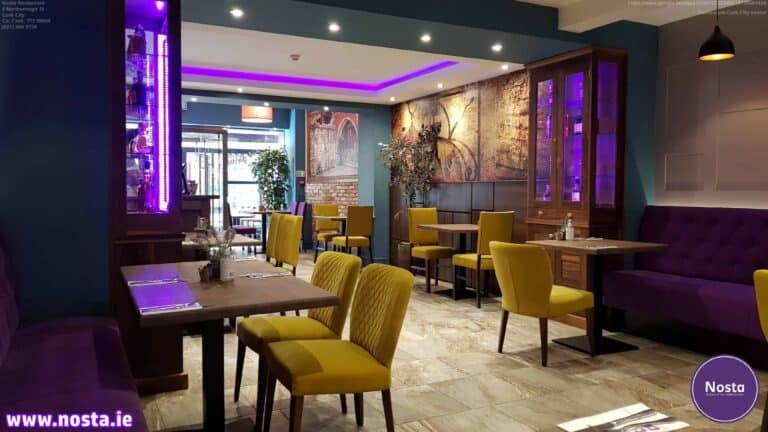
Nosta is on Marlborough Street, between St Patrick’s Street and Oliver Plunkett Street: a couple of minutes from the GPO, and five from the City Library, Bishop Lucey Park and Q-Park Grand Parade. Depending on why you are in town: