“Kebab” in Turkey means far more than the late-night wrap. It covers grilled skewers, meat sliced from a vertical spit, oven-baked trays and slow-cooked stews, and almost every region has its own. Here are the 14 worth knowing, starting with the ones you can order from head chef Niko’s grill on Marlborough Street.
In this guide
- The classics from the grill: Adana, Urfa, şiş, köfte, Beyti and döner
- Regional specialities: Cağ, tepsi, patlıcan, Oruk, çökertme, büryan, orman and bohça
- Turkish kebab at Nosta, and what to order first
- Questions people ask
The classics from the grill
These are the kebabs most people mean when they talk about Turkish food, and the ones you will find on menus from Istanbul to Cork. Most are cooked over very high heat, so the meat chars on the outside and stays juicy inside.
Adana kebab
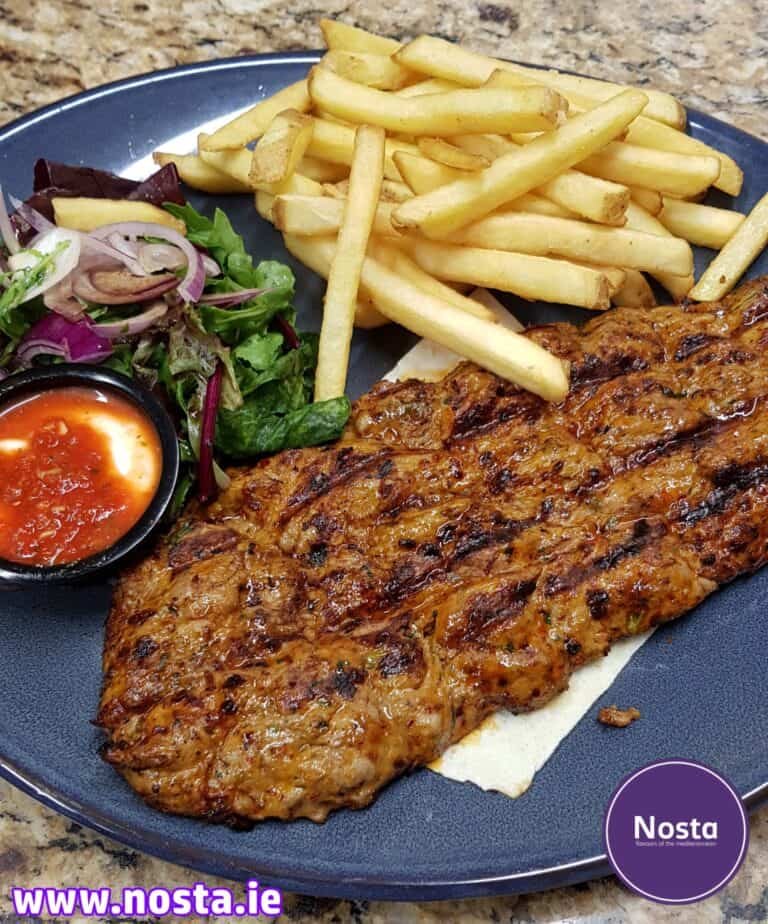
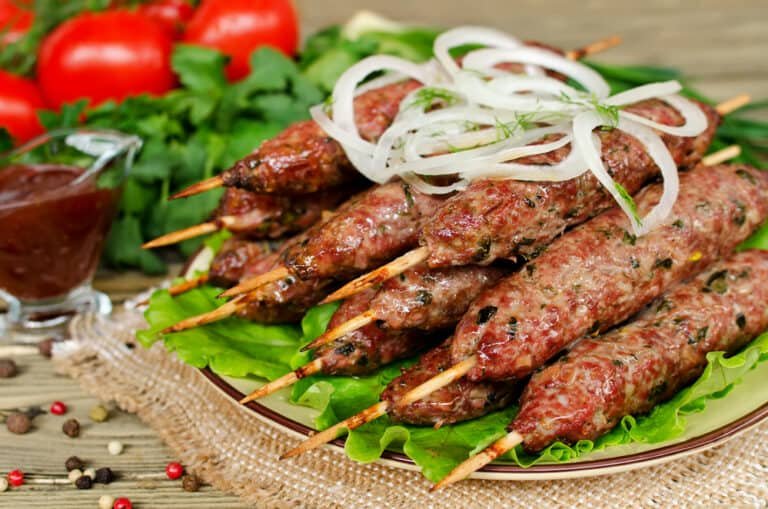
Acılı (spicy) Adana from the grill at Nosta
Adana is hand-minced lamb mixed with red pepper flakes and pressed onto a wide, flat skewer, then grilled over charcoal. It is the spicy one, and it usually comes with flatbread, grilled peppers and tomatoes, and onions dressed with sumac and parsley.
Adana has protected status in Turkey, which sets out how the real thing should be made: the meat, the fat, the chilli and even the width of the skewer.
Urfa kebab
Urfa kebab is made the same way as Adana but without the heat. It takes its name from the city of Şanlıurfa in south-eastern Turkey, and it is the one to order if you like the smoky flavour of minced lamb but not the chilli.
Şiş kebab
Lamb skewers with house bread and chips at Nosta
Şiş simply means “skewer”. Cubes of marinated meat are threaded onto metal skewers and grilled, so the edges catch while the middle stays tender. Lamb şiş is the classic; tavuk şiş is the chicken version, usually marinated in yoghurt, garlic and pepper paste.
Köfte
Köfte are seasoned minced-meat patties or long, flat kebabs, usually lamb or beef with onion and herbs, cooked on the grill. Almost every Turkish town has its own version, and a plate of köfte with bread, salad and pickled peppers is everyday Turkish food at its best.
Beyti kebab
Beyti at Nosta, baked with melted cheese
Beyti is named after Beyti Güler, whose Istanbul restaurant made it famous. Spiced minced meat is grilled, rolled up in thin lavash bread, cut into rounds and served with tomato sauce and yoghurt. It is one of the richest kebabs on any menu.
Döner kebab
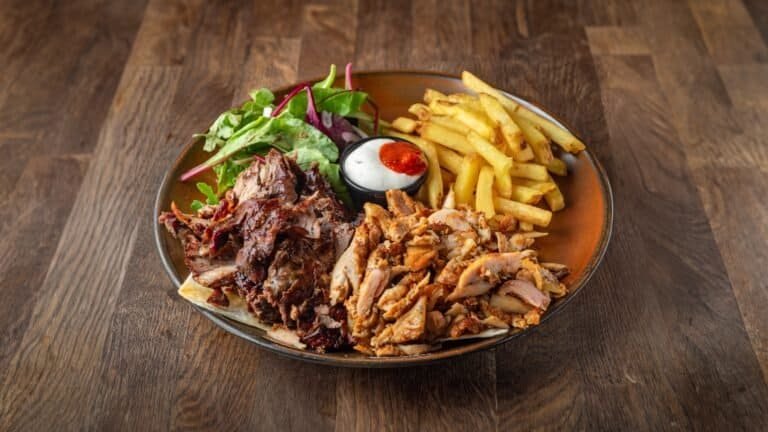
Lamb and chicken döner at Nosta
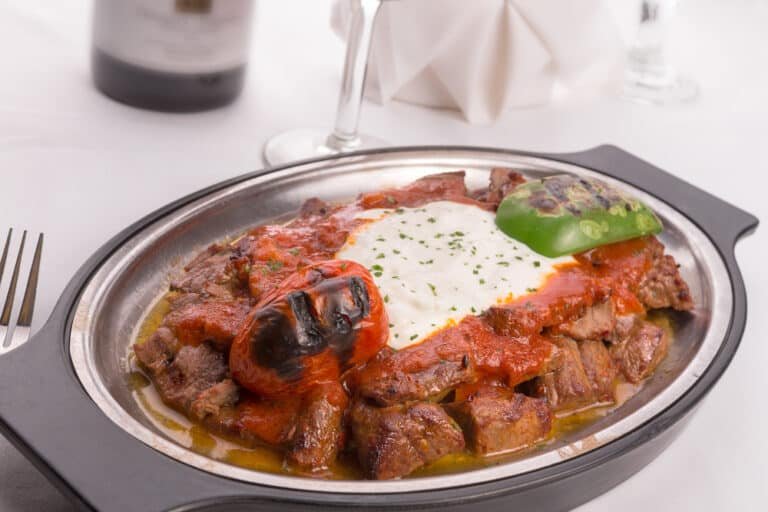
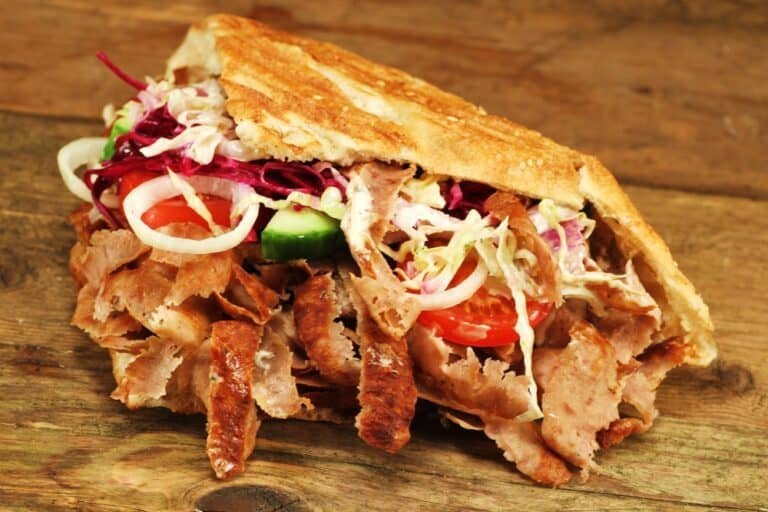
Döner means “turning”. Seasoned meat is stacked on a vertical rotisserie, roasted as it turns and shaved off in thin slices. In Turkey it is lamb, beef or chicken, never pork. The version most people know today is usually traced to Bursa in the 19th century, where İskender Efendi is credited with turning the spit upright; İskender kebab, döner served on bread with tomato sauce, butter and yoghurt, still carries his name.
Served in bread or on a plate with rice, salad and sauce, döner is the most popular kebab in Turkey and well beyond.
Regional specialities
Travel around Turkey and the kebab changes from town to town. These are not on our menu, but they are well worth looking out for on a trip, and they show how wide the word “kebab” really is.
Cağ kebab
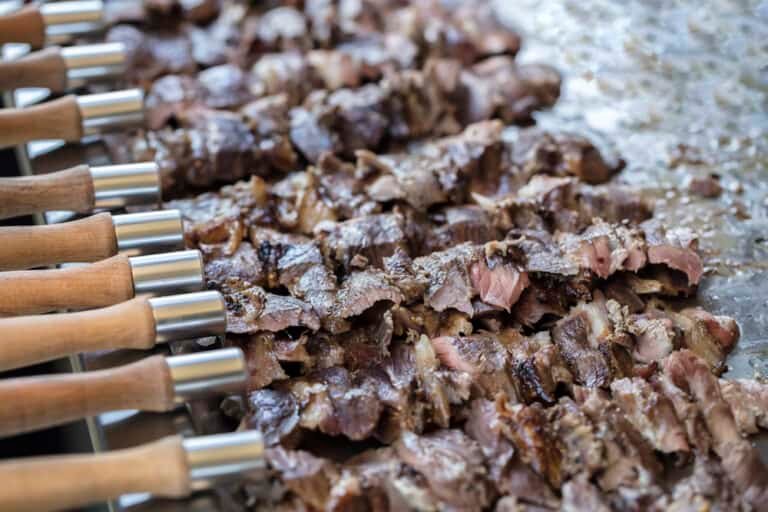
Cağ kebab, sliced onto small skewers
A speciality of Erzurum in eastern Turkey. Marinated lamb is stacked on a horizontal spit and roasted over a wood fire, then sliced straight onto small skewers (cağ means skewer) and eaten with lavash, onion and salad.
Tepsi kebab
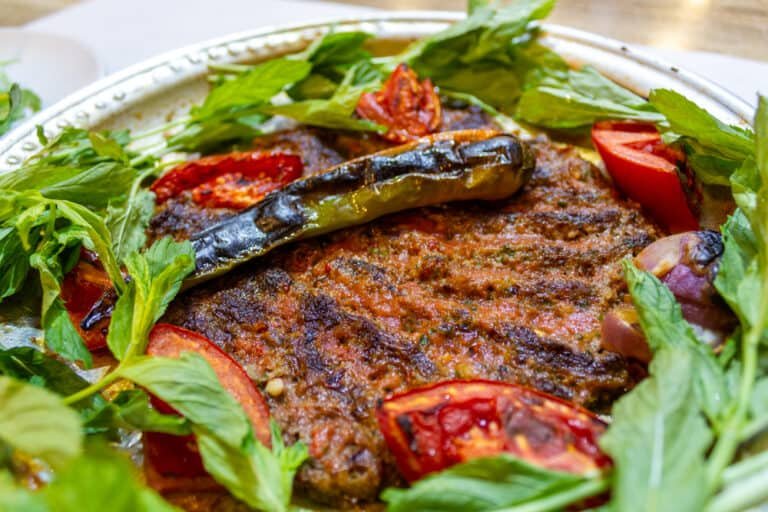
Tepsi kebab, baked in a round tray
Tepsi means tray. In Hatay, near the Syrian border, spiced minced meat is pressed into a round tray, topped with peppers and tomatoes and baked in a wood-fired oven, then cut into wedges like a pie.
Patlıcan kebab
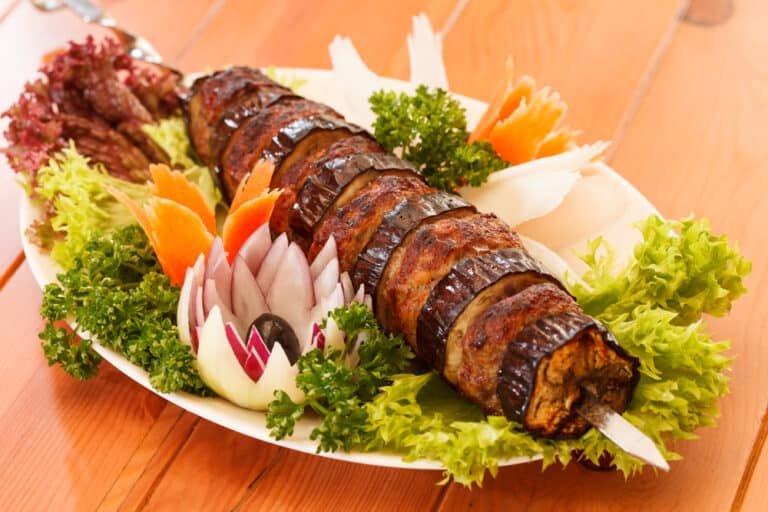
Patlıcan kebab: aubergine and minced meat on the grill
Patlıcan is aubergine. Thick slices of aubergine and small minced-meat patties are threaded on a skewer one after the other and grilled, so the aubergine soaks up the juices and turns soft and smoky.
Oruk
Oruk: minced meat and bulgur, baked
Oruk looks a little like Adana, but the minced meat is kneaded with fine bulgur wheat, onion and spices, shaped into long cylinders and baked. It is crisp outside and soft in the middle, and it is usually served with bread and salad.
Çökertme kebab
Çökertme: beef, crisp potatoes and garlic yoghurt
A favourite from the Aegean coast around Bodrum. Thin strips of sautéed beef or veal are piled on top of crisp matchstick potatoes and garlic yoghurt, then finished with tomato sauce.
Büryan kebab
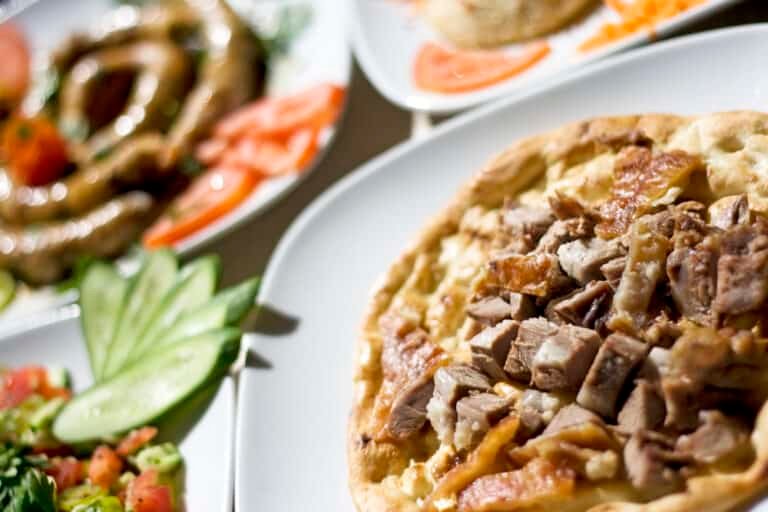
Büryan: lamb slow-cooked in a pit oven
Büryan comes from Siirt in south-eastern Turkey. Lamb is hung in a deep, sealed pit oven and slow-cooked for hours until it falls apart, then served on bread. It was a celebration dish in Ottoman times and is still a breakfast favourite in Siirt.
Orman kebabı
Orman kebabı: lamb slow-cooked with vegetables
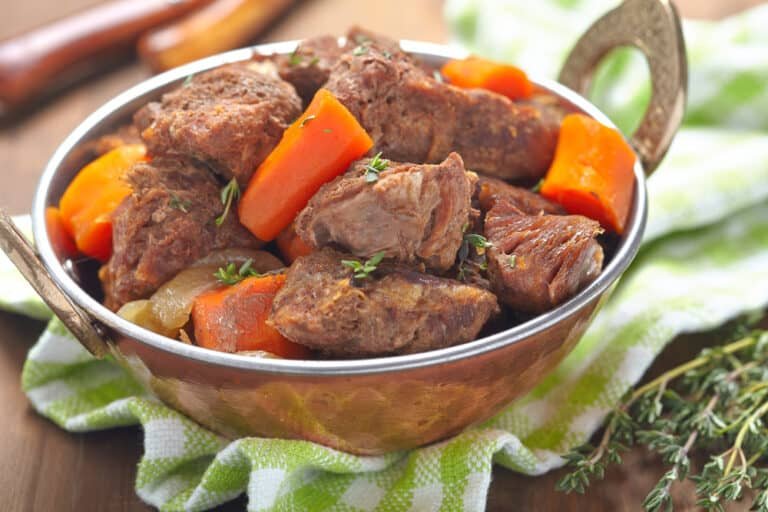
Despite the name, orman kebabı is a stew, not a grill. Lamb is cooked slowly with peas, potatoes, carrots and onions until tender, and served hot as a main course.
Bohça kebabı
Bohça kebabı: baked in a parcel
Bohça means bundle. Cooked meat and vegetables are wrapped in thin pastry or flatbread and baked into a neat parcel, which keeps everything moist inside. It is a dish for a sit-down meal rather than a quick bite.
Turkish kebab at Nosta
At Nosta, head chef Niko grills the classics to order, and all our meat is halal certified. Every kebab comes with house bread and chips or rice. If you are not sure where to start, these are the ones our regulars order most:
- Acılı Adana (€23.90) if you like it spicy
- Lamb skewers (€23.90), Niko’s own favourite
- Niko's Et Döner (€19.50) or the Mix Döner with lamb and chicken (€23.90)
- Niko's Platter for two (€69), which brings lamb, chicken and köfte skewers and both döners to the table
Questions people ask
What is the most popular kebab in Turkey?
Döner. It is sold everywhere from street stalls to restaurants, in bread or on a plate, and it is the kebab most people outside Turkey know first.
What is the difference between Adana and Urfa kebab?
They are made the same way, from hand-minced lamb on a wide skewer. Adana is spicy with red pepper flakes; Urfa is mild.
What is the difference between döner, gyros and shawarma?
All three are meat cooked on a vertical spit and sliced thin. Döner is the Turkish original, gyros is the Greek version (often pork in Greece) served with tzatziki, and shawarma is the Middle Eastern version, usually wrapped in thin bread with garlic sauce or tahini.
What does şiş mean?
Şiş means skewer. Şiş kebab is cubes of marinated meat on a skewer; tavuk şiş is the chicken version.
Is kebab healthy?
It depends on the kebab. Grilled skewers such as chicken şiş are lean and high in protein, especially with salad instead of chips. Döner and minced-meat kebabs are richer.
What does kebab mean?
Kebab (kebap in Turkish) is a broad word for meat cooked over or beside a fire: grilled on skewers, roasted on a spit, baked in a tray or slow-cooked. The word has been used across the Middle East and Central Asia for centuries.
What is the difference between kebab and kabab?
Nothing but spelling. Kebab, kebap, kabab and kabob are the same word written in different languages and regions.
What is in a döner kebab?
Thinly sliced lamb, beef or chicken from a vertical spit, usually served in bread or on a plate with salad, onions, tomatoes and a sauce such as garlic yoghurt. In Turkey döner is never pork.
What is the difference between kebab and köfte?
Köfte is one kind of kebab: seasoned minced meat shaped into patties or flat sausages and grilled. Kebab is the wider family, which also includes skewered cubes of meat, döner and oven dishes.
What is a chicken kebab called in Turkish?
Tavuk şiş: cubes of marinated chicken on a skewer. Chicken döner is called tavuk döner.
What is a lamb kebab called in Turkish?
Kuzu şiş is skewered cubes of lamb. Adana and Urfa kebabs are also made from minced lamb.
What is the difference between a chicken kebab and a şiş kebab?
Şiş just means skewer, so a chicken kebab on a skewer is a şiş kebab. Şiş can be lamb, beef or chicken; tavuk şiş is the chicken version.
What is the difference between kebab and gyros?
Gyros is the Greek relative of döner: meat cooked on a vertical spit, sliced and wrapped in pitta with tzatziki. In Greece gyros is often pork; Turkish döner never is.
Is souvlaki a kebab?
Yes, in the broad sense. Souvlaki is the Greek name for small pieces of grilled meat on a skewer, very close to Turkish şiş. In Greece it is often pork.
What is kefta?
Kefta, or kofta, is the North African and Middle Eastern name for seasoned minced meat shaped onto skewers or into balls and grilled, a close cousin of Turkish köfte.
Who invented döner kebab?
Meat roasted on a horizontal spit has a long history in Anatolia. The upright döner most people know today is usually credited to İskender Efendi in Bursa in the 19th century.
What meat is used in Turkish kebab?
Traditionally lamb, which is still the favourite, along with beef and chicken. Some regional kebabs use mutton or veal. Pork is not used in Turkish kebab.
Why is kebab so popular?
It is simple, generous food: well-seasoned meat cooked over a high heat, with bread, salad and sauce. It works as a quick meal or a sit-down dinner, and it travels well.
What is veg seekh kebab?
An Indian kebab, not a Turkish one: minced vegetables and lentils or chickpeas shaped onto skewers and cooked in a tandoor. Turkish menus usually offer grilled vegetables and meze instead.