Moussaka is best known as a Greek dish: layers of aubergine, spiced meat sauce and a thick, golden béchamel. But versions of it are made all over the Balkans, Turkey, the Levant and Egypt, and most of them look nothing like the Greek one. Here is where moussaka comes from, how the famous Greek version was born, the regional variations, and a recipe that works.
However it is made, moussaka is comfort food: soft aubergine, rich tomato and meat, and something creamy or crisp on top. It is a dish for family meals and long Sunday lunches, and it tastes even better the next day.
Where the name comes from
The word comes from the Arabic musaqqa‘a, usually translated as “chilled” or “moistened”. In Arabic-speaking countries the name still refers to a cold dish of fried aubergine in tomato sauce. The Turkish musakka and the Greek moussaka both come from the same word, passed on through centuries of shared Ottoman cooking.
The origin and history of moussaka
Aubergines reached the eastern Mediterranean from Asia in the Middle Ages, and cooks quickly learned to fry them and layer them with meat and tomato. Medieval Arabic cookbooks, such as the 13th-century Kitab al-Tabikh from Baghdad, already contain aubergine and meat dishes that are early relatives of moussaka. By the time of the Ottoman Empire, aubergine and minced meat cooked together was a classic across Turkey, the Balkans and the Levant.
The Greek moussaka most people know today is much newer. In the 1920s, the Greek chef Nikolaos Tselementes, who had trained in France and Vienna, published a recipe that added a thick French-style béchamel on top and turned the dish into an elegant baked layer. His version became the national favourite, and it is now what most of the world means by moussaka.
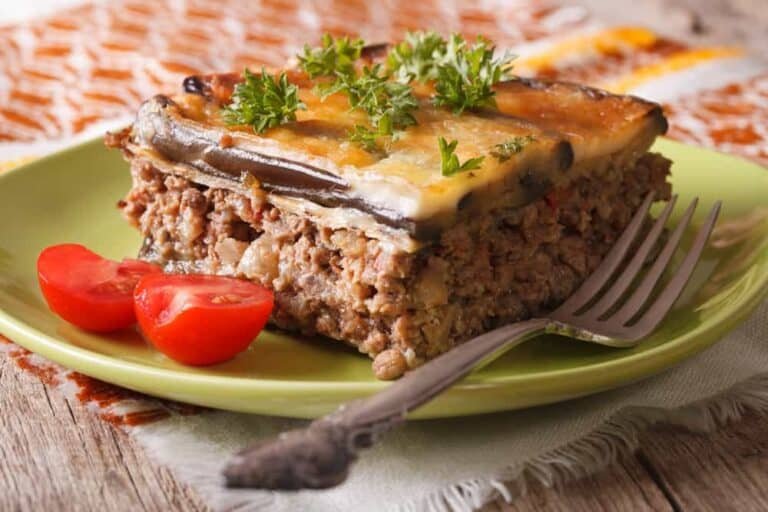
Greek moussaka, with its golden béchamel top
How to make Greek moussaka
This version serves four to six. It takes time, but each step is simple.
For the vegetables:
- 2 large aubergines, sliced into 1 cm rounds
- 2 large potatoes, peeled and sliced 5 mm thick
- Olive oil and salt
For the meat sauce:
- 500 g minced lamb or beef
- 1 onion, finely chopped, and 2 cloves of garlic
- 1 tablespoon tomato paste and a 400 g tin of chopped tomatoes
- 100 ml red wine, 1 bay leaf, ½ teaspoon cinnamon, a pinch of allspice, salt and pepper
For the béchamel:
- 50 g butter and 50 g plain flour
- 500 ml warm milk
- 1 egg yolk, a pinch of nutmeg, and 50 g grated cheese such as kefalotyri or parmesan
Method:
- Vegetables: salt the aubergine slices and leave for 20 minutes, then pat dry. Brush the aubergine and potato slices with olive oil and roast at 200°C for about 20 minutes, turning once, until soft and golden.
- Meat sauce: brown the mince with the onion and garlic, add the tomato paste, then the wine, and let it bubble. Add the tomatoes, bay leaf and spices and simmer for 30 minutes, until thick.
- Béchamel: melt the butter, stir in the flour and cook for a minute, then whisk in the warm milk a little at a time until thick and smooth. Take it off the heat and beat in the egg yolk, nutmeg and half the cheese.
- Assemble: in a deep baking dish, lay the potatoes first, then half the aubergine, all the meat sauce and the rest of the aubergine. Pour over the béchamel and scatter with the remaining cheese.
- Bake at 180°C for 40 to 45 minutes, until deep golden. Leave it to rest for at least 20 minutes before cutting, so the layers hold.
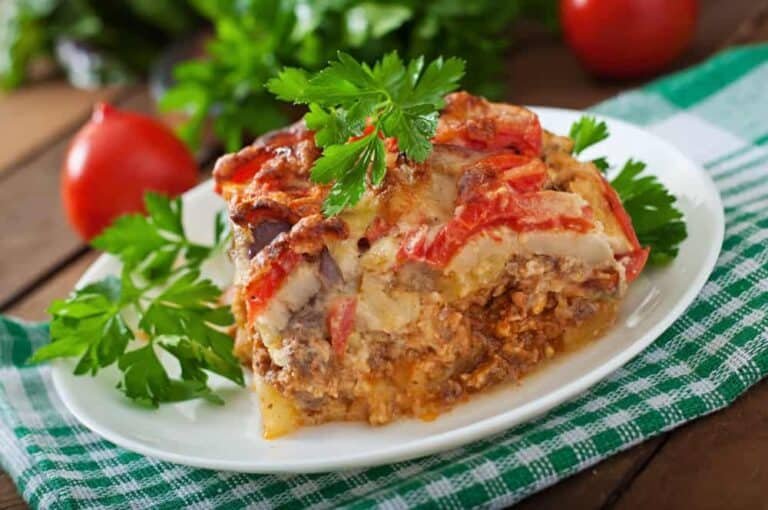
Let moussaka rest before cutting, so the layers hold
Tips for a perfect moussaka
- Roast, don’t fry, the aubergine. Fried aubergine soaks up a lot of oil; brushing the slices with oil and roasting them gives the same soft texture with far less fat.
- Cook the meat sauce until it is thick. A watery sauce makes a soggy moussaka. It should hold its shape on a spoon.
- Make the béchamel thick. It should coat the back of a spoon heavily; the egg yolk helps it set into a firm, golden layer.
- Let it rest. Moussaka straight from the oven falls apart. Twenty to thirty minutes on the side lets the layers settle, and it is easier to cut.
- Make it a day ahead. Like many layered dishes, moussaka tastes even better the next day, warmed through in the oven.
In Greece, moussaka is a dish for Sundays and family gatherings, and in tavernas it is usually made in big trays in the morning and served warm, not piping hot, through lunch and dinner. It is eaten with a salad, bread and a glass of wine, and nobody minds if it is a little different from one kitchen to the next.
Moussaka is served warm, not piping hot
Moussaka around the region
Greek moussaka
Greek moussaka
Aubergine, often potato, a meat sauce spiced with cinnamon and a thick béchamel, baked until golden and cut into squares. Served warm rather than hot.
Turkish musakka
Fried or roasted aubergine cooked with minced meat, onion, peppers and tomatoes in one pan, then baked or simmered. It is served warm with rice pilaf and yoghurt, and it is everyday home cooking in Turkey.
Balkan moussaka
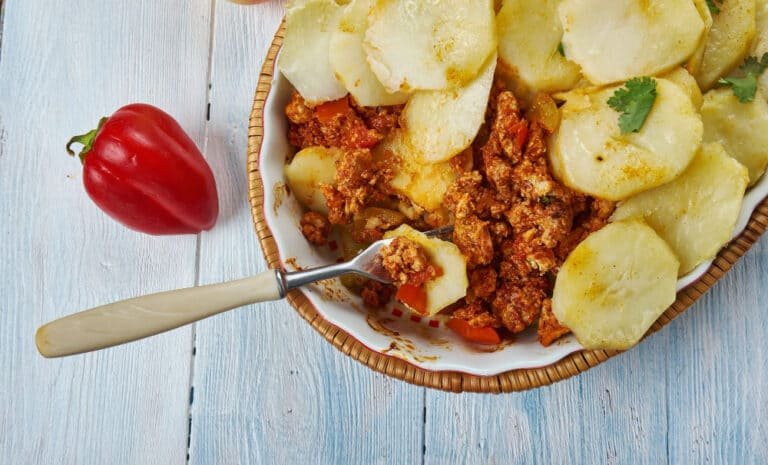
Balkan moussaka, made with potatoes
In Serbia, Bulgaria, Bosnia, Romania and North Macedonia, moussaka is usually made with potatoes rather than aubergine, layered with minced meat and topped with an egg and milk or yoghurt custard.
Levantine maghmour
In Lebanon, musaqqa‘a or maghmour is a meat-free stew of fried aubergine, chickpeas, onion and tomato, often eaten cold or at room temperature with flatbread as part of a meze.
Egyptian mesa’a
Egyptian mesa’a is fried aubergine and peppers baked in a garlicky tomato sauce, sometimes with minced meat, and served warm or cold with bread.
Aubergine dishes at Nosta
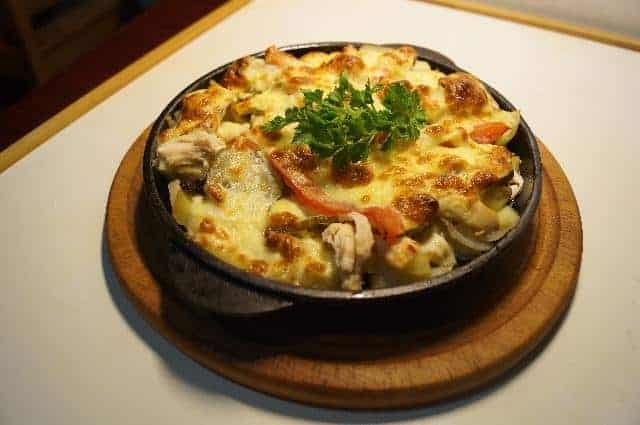
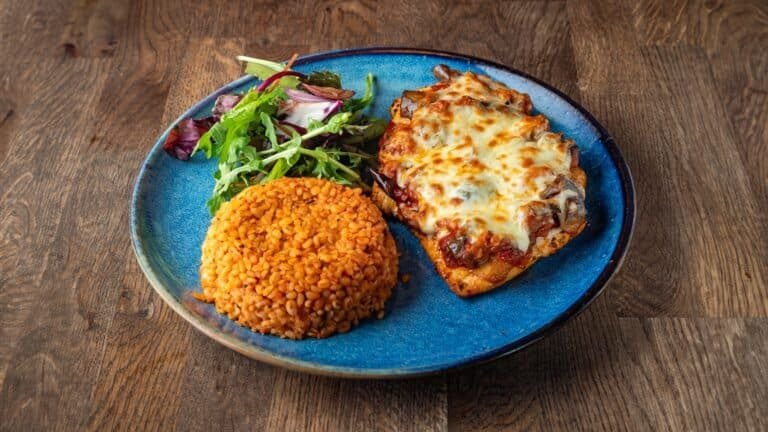
Moussaka is not on our menu right now, but aubergine is: try the Turkish aubergine salad (€9.00), cooked in tomato sauce with peppers and garlic, or the Istim Tavuk (€26.90), chargrilled chicken topped with mozzarella and aubergine salad and finished in the wood-burning oven. See the dinner menu.
Istim Tavuk at Nosta: chicken with aubergine and mozzarella from the wood oven
Love aubergine?
At Nosta
Start with the aubergine salad or the meze plate for two, then try the Istim Tavuk from the wood-burning oven. See
chicken dishes on our menu.
Questions people ask
What is moussaka?
A baked dish of layered aubergine, a spiced meat sauce of lamb or beef with tomato, and a thick béchamel top, often with a layer of potato underneath. It is served in squares, like lasagne.
What is the difference between lasagne and moussaka?
Both are layered and baked, but lasagne uses sheets of pasta with a meat sauce and béchamel, while moussaka uses slices of aubergine, often with potato, instead of pasta. Moussaka’s meat sauce is usually spiced with cinnamon.
What is traditionally served with moussaka?
A simple Greek salad or a green salad, and crusty bread. Moussaka is rich, so a fresh, sharp salad balances it.
Why is it called moussaka?
From the Arabic musaqqa‘a, meaning “chilled” or “moistened”, the name of a cold aubergine and tomato dish that is still made in the Arab world.
Does moussaka contain gluten?
Usually, yes: the béchamel is thickened with wheat flour. Make a gluten-free version by thickening the béchamel with cornflour instead.
Where is moussaka from?
Moussaka comes from the eastern Mediterranean. The famous layered version with béchamel is Greek, created in the 1920s. But aubergine and meat dishes called musakka or musaqqa‘a were made across the Ottoman and Arab worlds for centuries before that.
When was moussaka invented?
The Greek moussaka most people know, topped with béchamel, dates from the 1920s and is credited to the chef Nikolaos Tselementes. Aubergine and meat dishes called musakka or musaqqa‘a are much older, from Ottoman and Arab cooking.
Is moussaka Greek or Turkish?
Both, but they are different dishes. Greek moussaka is layered and baked under béchamel. Turkish musakka is aubergine and minced meat cooked in tomato sauce, served from the pan with rice or bread, and has no béchamel.
Should aubergines be salted before cooking?
Modern aubergines are rarely bitter, so it is not essential, but salting for 20 minutes and patting dry draws out water, helps them brown and means they soak up less oil.
Can you freeze moussaka?
Yes. Cool it completely, wrap it well and freeze for up to three months. Defrost overnight in the fridge and reheat in the oven.
Can you make moussaka ahead of time?
Yes, and it is often better for it. Assemble it the day before, keep it covered in the fridge and bake it the next day, adding 10 to 15 minutes to the cooking time. Let it rest 20 to 30 minutes before cutting so the layers hold.
Is there a vegetarian moussaka?
Yes. Replace the meat with lentils, mushrooms or chickpeas, or make Lebanese maghmour, which is naturally meat-free.