Pizza is probably the most popular food on earth. An estimated five billion are eaten every year, it is one of the most photographed dishes on social media, and it even has its own day, World Pizza Day, on 9 February. Yet it started as cheap street food in the back streets of Naples. That Neapolitan tradition lives on in Ireland too, in the wood-fired pizza in Cork City that comes out of our wood-burning oven on Marlborough Street every day. Here is how pizza got its name, how it conquered the world, and how to make a good one at home.
The word pizza appears in a Latin document from Gaeta, a town on the coast north of Naples, dated 997 AD, in which a tenant promises the local bishop a yearly gift of pizzas. Nobody knows for certain where the word comes from. It may come from the Latin pinsere, “to press” or “to knead”; from the Greek pitta, flatbread; or from the Lombard word bizzo or pizzo, a mouthful.
People around the Mediterranean have baked flatbreads with toppings for thousands of years: the ancient Greeks, Romans and Egyptians all ate breads topped with oil, herbs, cheese or dates. But these were not pizza as we know it, not least because tomatoes did not reach Europe from the Americas until the 16th century.
Pizza as we know it was born in Naples in the 18th and early 19th centuries. The city was crowded and poor, and pizzas topped with tomato, garlic, oil, cheese or anchovies were sold on the street as cheap, quick food for working people, often folded and eaten on the move. The first pizzerias, with wood-fired ovens, opened in Naples in this period.
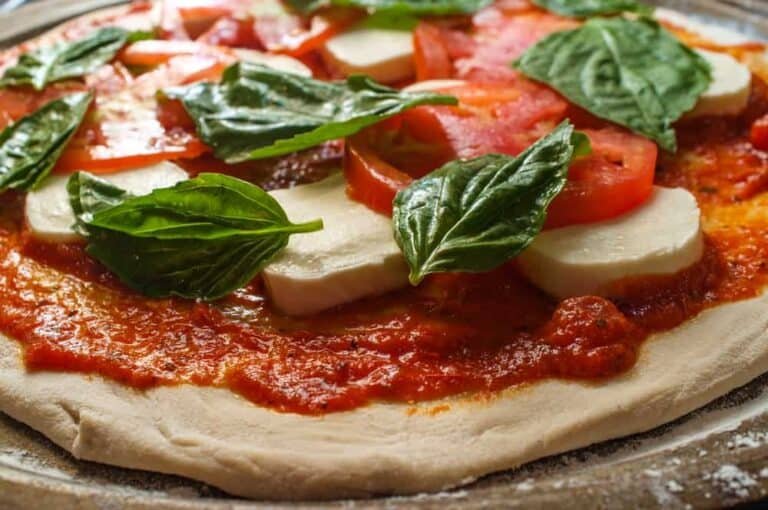
The most famous chapter came in June 1889. According to the well-known story, the Neapolitan pizzaiolo Raffaele Esposito made pizzas for King Umberto I and Queen Margherita during their visit to Naples, and the queen’s favourite was topped with tomato, mozzarella and basil, the red, white and green of the Italian flag. It has been called the Margherita ever since.
Italian emigrants then took pizza around the world. In 1905, Gennaro Lombardi opened what is often called the first pizzeria in the United States, in New York, and after the Second World War pizza spread across America and then the rest of the world. In 2017, UNESCO added the art of the Neapolitan pizzaiuolo to its list of intangible cultural heritage.
For the dough (two 30 cm pizzas):
Mix the yeast into the water, then add it to the flour and salt with the olive oil and bring it together into a dough. Knead for about 10 minutes until smooth and stretchy. Cover and leave to rise in a warm place for 1 to 2 hours, until doubled. For more flavour, let it rise slowly in the fridge overnight.
For a simple tomato sauce: a 400 g tin of good Italian plum tomatoes, crushed by hand, with a pinch of salt, a little olive oil and a few basil leaves or a pinch of oregano. Neapolitan pizzerias do not cook the sauce: it cooks on the pizza.
To bake: heat your oven as high as it will go, ideally 250°C or more, for at least 30 minutes, with a pizza stone or an upturned heavy baking tray inside. Divide the dough in two and stretch each piece by hand into a thin round, leaving the edge a little thicker. Spread on a thin layer of sauce, add torn mozzarella and your toppings, and slide it onto the hot stone. Bake for 7 to 10 minutes, until the edge is puffed and charred in places and the cheese is bubbling. Finish with fresh basil and a drizzle of olive oil.
Keep toppings light. A few good ingredients, such as fresh mozzarella, basil, salami, mushrooms, peppers or olives, are better than piling on everything in the fridge.
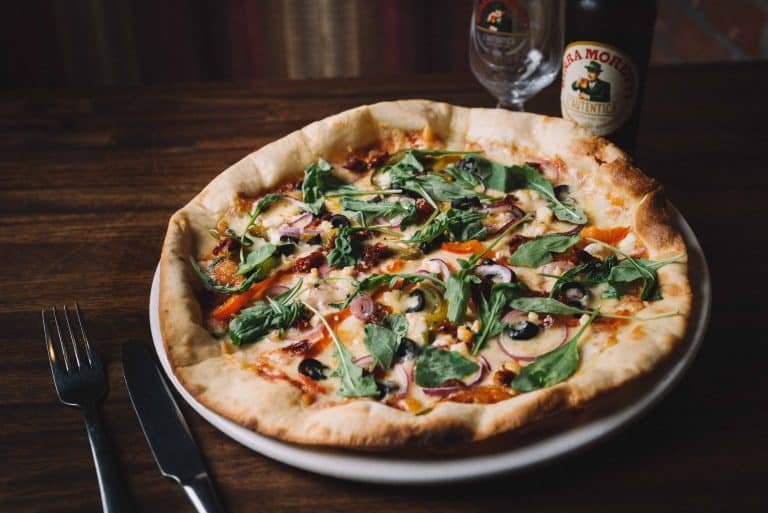
Two pizzas with the same toppings can taste completely different. The difference comes down to three things.
A thin, Neapolitan-style base is soft in the middle with a puffy, blistered edge, and lets the toppings shine. A thicker, pan-style base is more like bread, soft and filling, and the dough becomes the main flavour. Long, slow rising gives any dough more flavour and makes it easier to digest.
Mozzarella is the classic: it melts smoothly and stretches. Other cheeses add character: parmesan or pecorino for saltiness, gorgonzola or blue cheese for strength, goat’s cheese or feta for tang, ricotta for creaminess, and provolone, cheddar or gruyère for depth. A four-cheese pizza combines several.
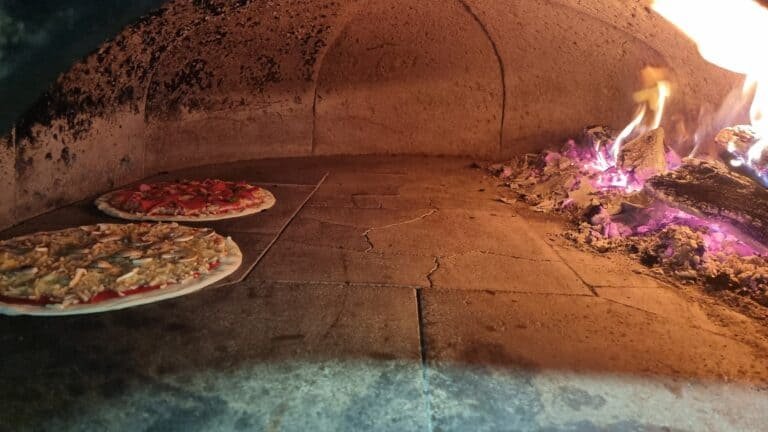
Heat matters most. A wood-fired oven reaches far higher temperatures than a home oven, so a pizza bakes in a few minutes: the base crisps and chars at the edges before the toppings dry out, and the wood fire adds a hint of smoke.
Pizza tastes so good partly because tomatoes, cheese and cured meats are naturally rich in glutamate, the source of the savoury taste known as umami.
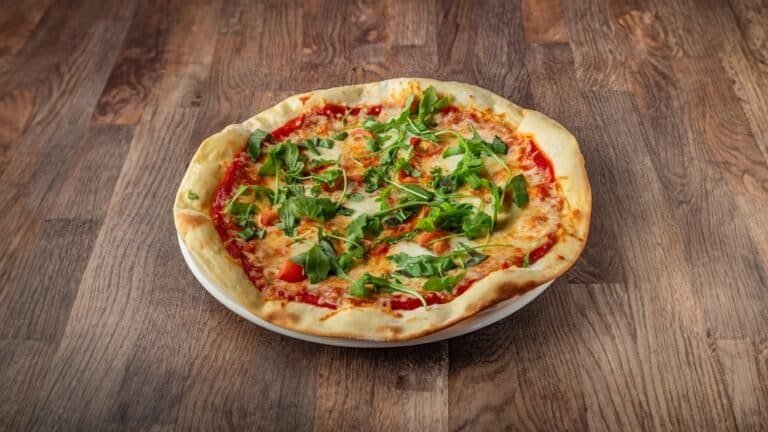
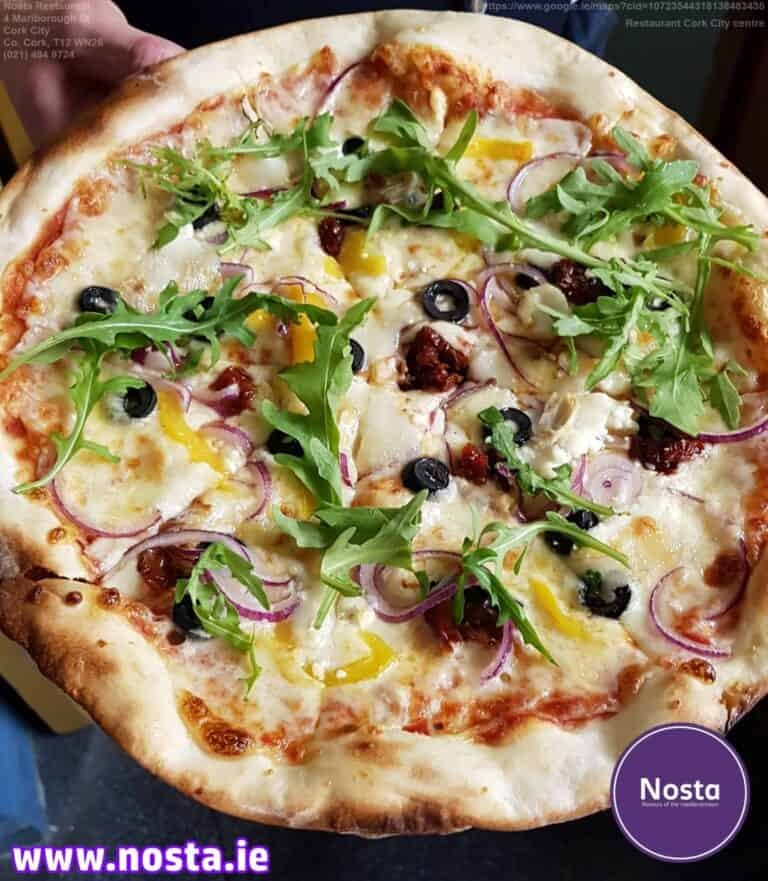
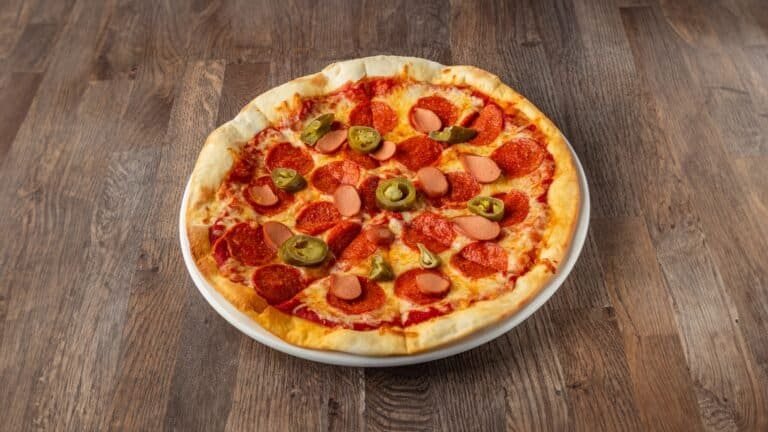
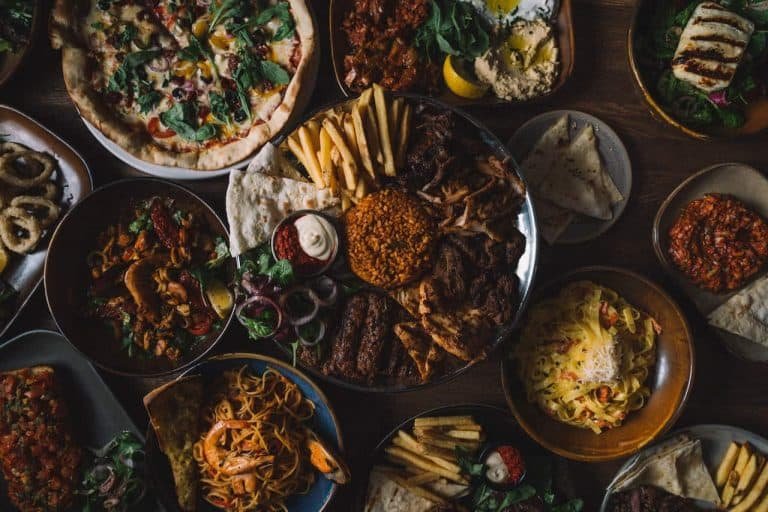
At Nosta, pizzas are baked in a wood-burning oven, from the Margherita (€17.50) to the Mediterranean, with goat’s cheese, olives and sundried tomatoes, and the Nosta Pizza with Turkish sucuk and jalapeños. Our dough is made fresh every day and gluten-free bases are available. Never tried Turkey’s own answer to pizza? Order a pide or lahmacun alongside. See pizza at Nosta.